Advanced Analytics Series: Acumatica Generic Inquiries as a Data Source and GIQL Syntax in 2025 R2
Acumatica Generic Inquiries (GIs) are one of the most powerful reporting and analytics tools in Acumatica. They give businesses the ability to shape ERP data into meaningful insights that are accessible and actionable. But with greater use comes greater complexity. Over time, organizations often find themselves maintaining similar formulas across multiple GIs, which can create scalability challenges.
In this article, part of our Advanced Analytics Series, we’ll focus on a powerful technique: using a Generic Inquiry as the data source for another Generic Inquiry. We’ll also touch on how Acumatica’s new GIQL (Generic Inquiry Query Language), introduced in 2025 R2, enhances flexibility when building and maintaining GIs.
The Data Source Approach
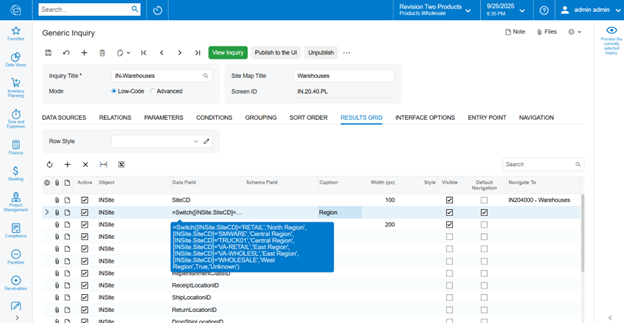
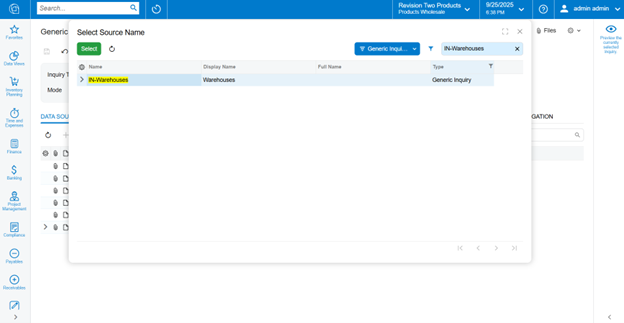
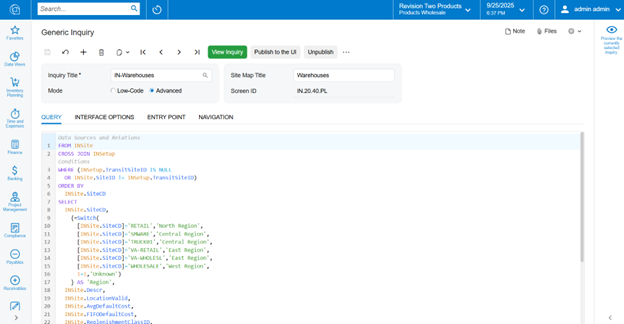
This is where using an Acumatica Generic Inquiry (GI) as the data source for another GI comes into play. Instead of repeating formulas in multiple places, you can build a single “reference GI” that defines your warehouses and their associated regions. Once created, that GI can be referenced as a data source anywhere else you need it, shipments, orders, or inventory stock summaries.
This creates a single source of truth. Any updates to the warehouse-to-region mapping happen once and flow automatically to every GI that references it.
A Switch Statement Assigns Warehouses to Regions
The benefits of this approach go beyond convenience:
Scalability: Maintain one formula instead of dozens.
Consistency: Reduce the risk of mismatched or outdated logic.
Auditability: Demonstrate a single reference point for compliance and reporting.
Efficiency: Free up time to focus on higher-value analytics.
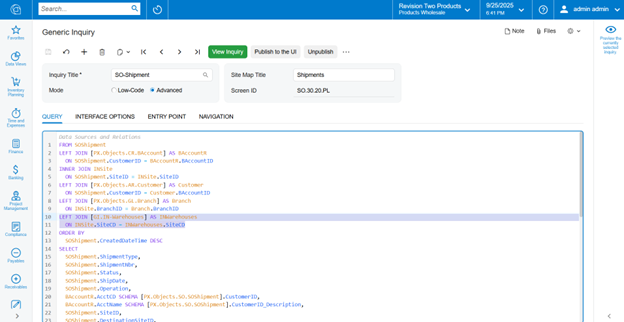
A Second Generic Inquiry Is Linked to The First
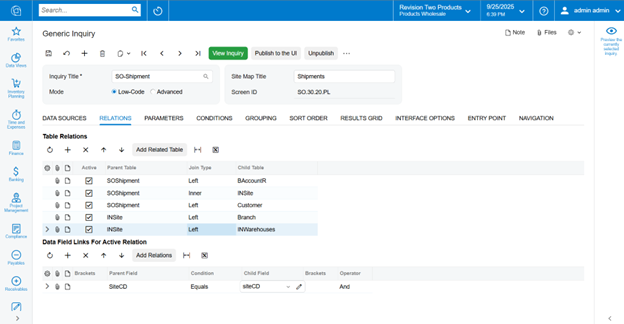
The Relationship Is Established
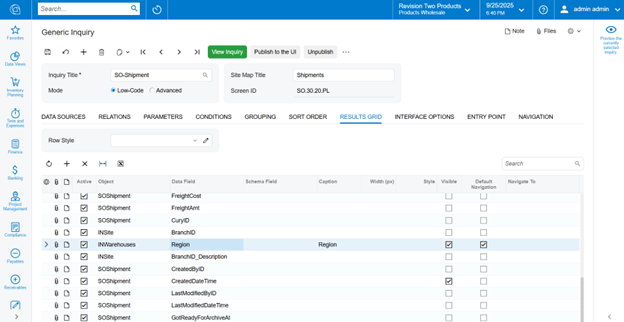
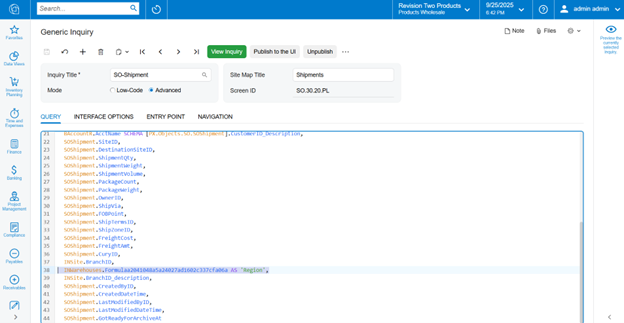
The Region Field Is Available
The Role of GIQL in 2025 R2
While using Acumatica Generic Inquiries as data sources isn’t new, Acumatica’s 2025 R2 release introduces GIQL, Generic Inquiry Query Language. GIQL makes working with GIs feel more like writing SQL, allowing for more advanced queries, reusable logic, and streamlined development.
Together, these capabilities open new doors. You can now design advanced reference GIs that can be used consistently across multiple areas, while leveraging GIQL to simplify formulas and logic. For example, a regional grouping that once required a complex switch statement can now be built in one place and applied everywhere it’s needed, without duplication.
A Switch Statement In GIQL Assigns Warehouses to Regions
The Relationship Is Established In GIQL
The Regions Field Is Added In GIQL
Best Practices at Crestwood
At Crestwood, we help clients design GIs with best practices in mind. By educating users on foundational principles like system navigation, workflow, and terminology, we can focus deeper conversations on building reusable components that scale. Whether it’s using GIs as data sources or applying GIQL for more complex logic, this approach helps ensure analytics grow alongside your business.
A Step Toward Smarter Analytics
Generic Inquiries as data sources provide structure. GIQL provides flexibility. Together, they make Acumatica reporting more robust, scalable, and easier to maintain. For organizations looking to future-proof their reporting, mastering these techniques is an essential step in the journey.
Transform Your Business with Acumatica ERP
As a Preferred Acumatica VAR, we deliver tailored cloud ERP solutions to streamline operations and fuel growth.
Director of Acumatica Services at Crestwood | Leading Exceptional Teams to Drive Growth, Resolution, and Lasting Success | MVP, Community Hero, Impact Player | Data Obsessed.